DPhi Space runs first AI language model aboard an orbiting satellite
Tech
4 May 2026
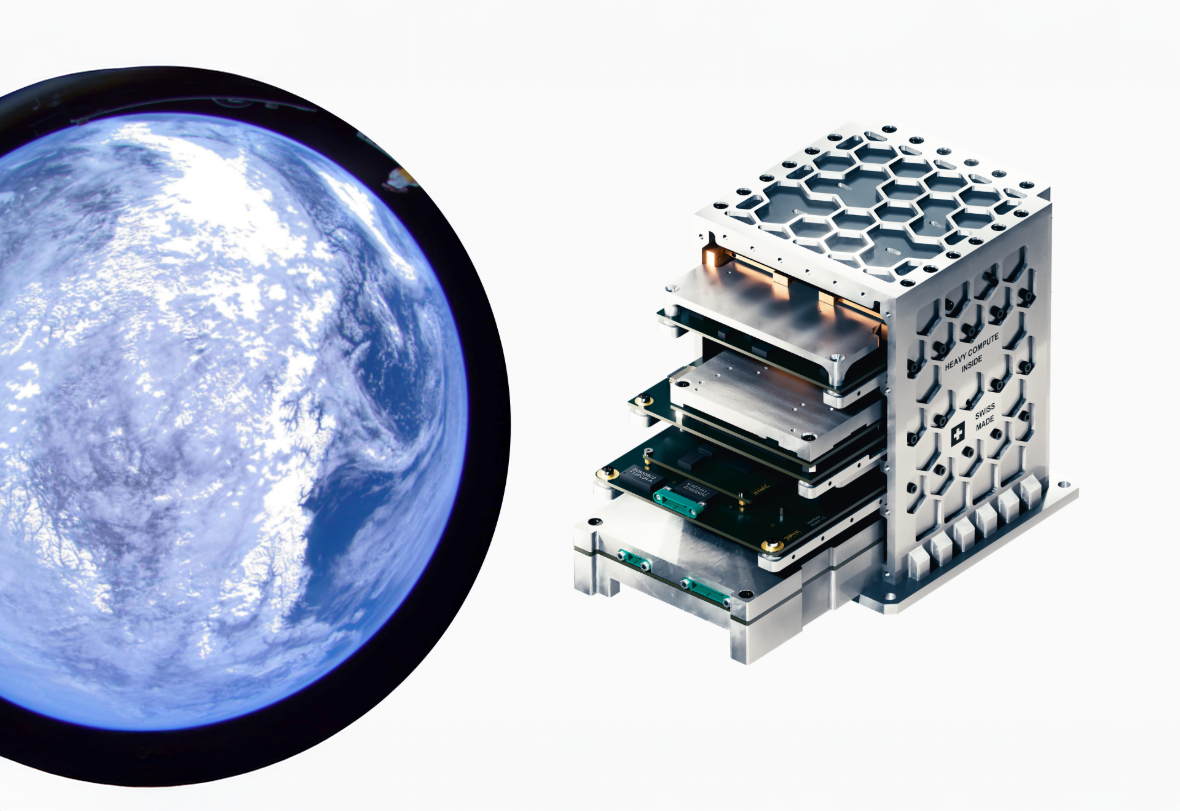 An image of Earth captured by Momentus and processed by DPhi Space’s Clustergate-2 server directly in orbit, demonstrating on-board AI inference capabilities. | © DPhi Space
Vaud-based DPhi Space has commissioned Clustergate-2, an on-orbit compute platform that successfully ran a vision-language model aboard a satellite in orbit.
On 29 April 29 2026, DPhi Space, a Lausanne-based start-up specializing in shared satellite infrastructure, announced the commissioning of Clustergate-2, a programmable compute server now operating in orbit. The platform launched in late March aboard Momentus‘ Vigoride 7 satellite as part of SpaceX’s Transporter-16 rideshare mission. During commissioning, Clustergate-2 processed an image of Earth using a vision-language model developed by Liquid AI and generated a descriptive caption directly in orbit, a first public demonstration of on-orbit large language model inference.
Clustergate-2 brings a heterogeneous processing cluster to space, featuring an NVIDIA GPU provided by EDGX and support for containerized software applications. The platform allows developers to deploy and run software in orbit in much the same way as they would in a cloud environment, enabling AI processing and real-time data analytics at the edge of space. The core problem DPhi Space is addressing is the growing gap between the volume of data that space sensors produce and what satellites can realistically transmit back to Earth. By moving compute capacity directly next to the sensor, the company reduces dependence on downlink bandwidth and enables faster, more autonomous decision-making in orbit.
To accelerate the development of applications for Clustergate-2, DPhi Space is co-organizing a hackathon with Liquid AI, with early submissions already targeting maritime anomaly detection and illegal mining identification. The initiative reflects the company’s broader ambition to open orbital infrastructure to a wider developer community. DPhi Space previously raised CHF 2.1 million in pre-seed funding to bring its shared satellite platform to market.