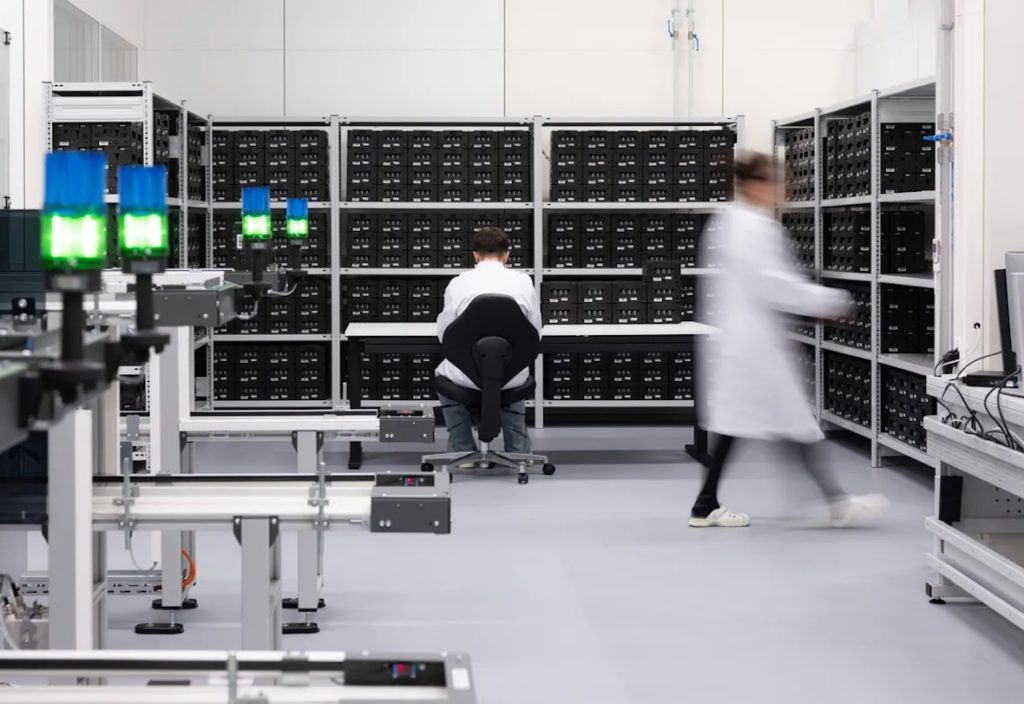
University of Fribourg physicists create a new state of matter with light pulses
Precision
8 July 2026
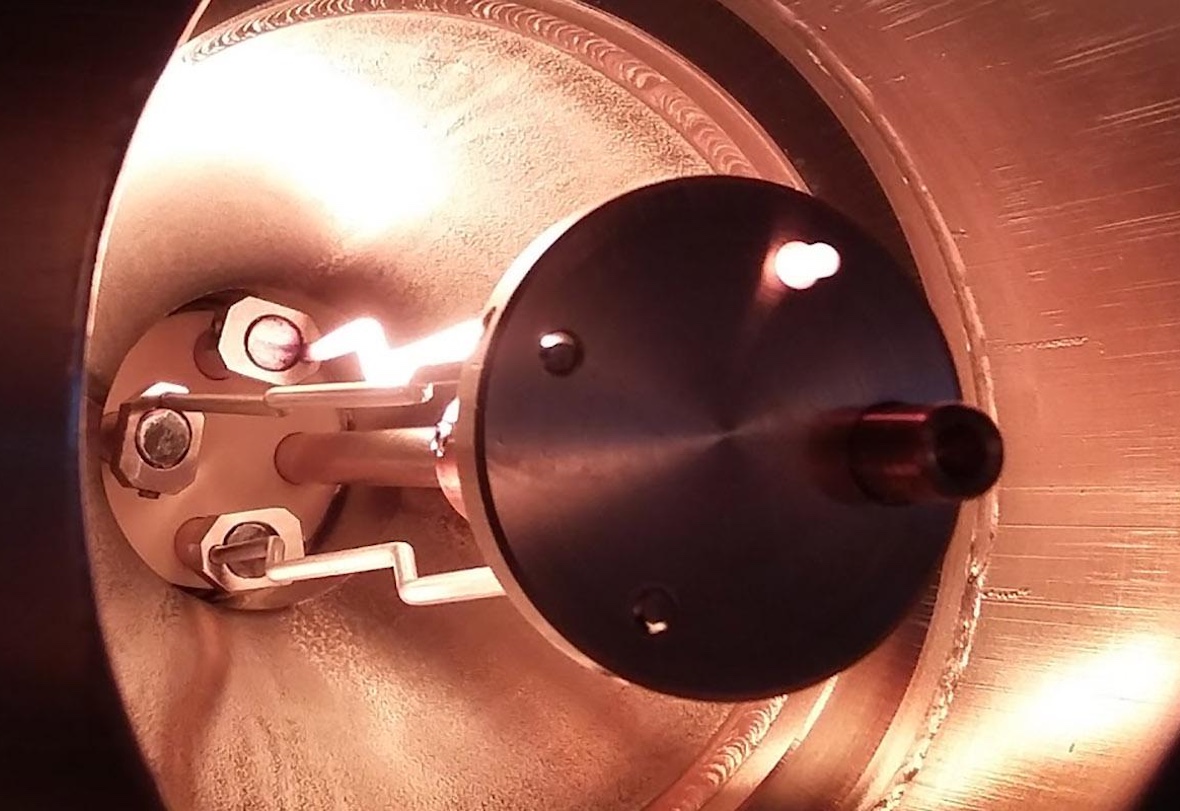 Physicists at the University of Fribourg used ultrafast light pulses to briefly transform a tin telluride crystal into a new state of matter. | © University of Fribourg
In a world first, physicists at the University of Fribourg, with an international team, have used ultrafast light pulses to briefly create a topological state of matter in a semiconductor, confirming a theory formulated over a decade ago.
Physicists at the University of Fribourg, working with an international team, have created a new, fleeting state of matter for the first time, using ultrafast light pulses to briefly give a semiconductor topological properties. The result, published in the journal Nature Physics, confirms a theoretical prediction made more than a decade ago.
By applying light pulses lasting just a few femtoseconds, one millionth of a billionth of a second, the researchers modified the behavior of electrons in a crystal of tin telluride, a semiconductor known for its special properties. Using an advanced spectroscopy technique that captures electron movement on its own timescale, they observed the material’s electronic structure change under the laser, forming hybrid light-matter states known as Floquet-Bloch states.
The most striking result, according to physics professor Claude Monney, was the appearance of a Dirac cone, a quantum signature of a topological phase that lets electrons move almost unobstructed through a material that normally prevents such motion. The state exists only while the light pulse is applied, around 100 femtoseconds, before disappearing.
The theory that light could momentarily endow a material with topological properties was demonstrated on paper in 2011, but had never been proven experimentally until now. Beyond its fundamental significance, the work opens the way to controlling the properties of semiconductors on demand with light, with potential applications in ultrafast, laser-driven electronic components such as next-generation transistors and in quantum computing.