Adaptyv raises USD 40 million for its automated protein lab
Life sciences
31 August 2026
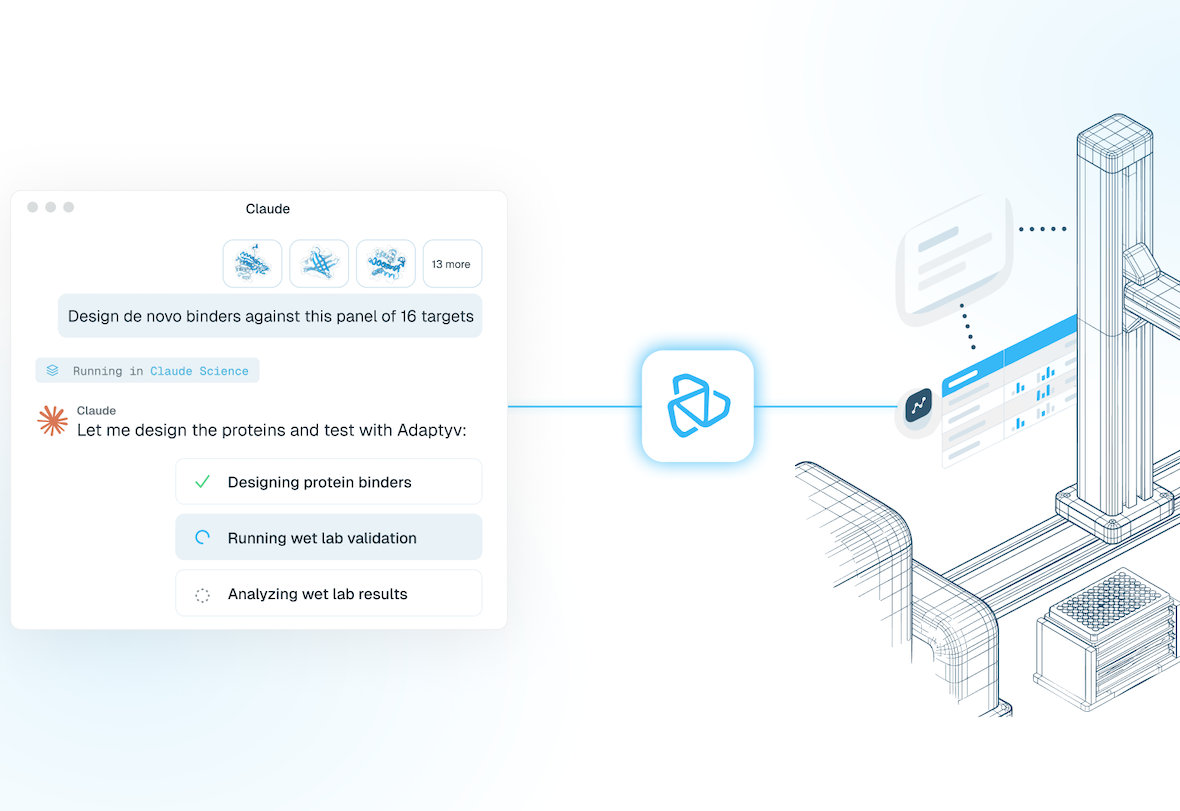 Adaptyv Biosystems’ automated wet lab combines synthetic biology, nanofluidics and machine learning to test newly designed proteins. | © Adaptyv Biosystems
Adaptyv Biosystems has closed a USD 40 million Series A round to expand the automated laboratory it operates for the rapid experimental validation of newly designed proteins.
Adaptyv Biosystems has closed a Series A funding round of USD 40 million led by Highland Europe, with existing investors Ace Ventures, ByFounders and Y Combinator doubling down. The company, based at the Biopôle life sciences campus, raised a USD 8 million seed round in 2025.
Adaptyv has developed an automated wet lab for the rapid experimental validation of newly designed proteins, combining synthetic biology, nanofluidics and machine learning while substantially reducing the cost per protein. The platform makes it easier for protein designers to generate data and engineer new proteins for applications ranging from designed antibodies and novel enzymes to alternative materials.
Over the past year the company has grown its lab throughput more than fivefold and onboarded over 100 customers, from AI-focused biology labs such as Chai Discovery and Boltz to pharmaceutical groups including Roche and Novo Nordisk, alongside start-ups using AI to accelerate drug discovery.
The round will fund growth along two axes. The first is capacity: once a workflow is automated, the company can replicate the workcell with the same protocol and software, and it plans to roughly triple lab capacity by the end of 2026 and keep growing through 2027. A new lab and office will open in London in the fourth quarter of 2026, alongside the expansion in Lausanne, and the team will grow from 25 to around 60 people, focused on production, automation and software. The second axis is complexity: moving from protein binding, already a market worth several hundred million dollars a year, toward developability and full biophysical characterization, then next-generation modalities such as peptides and degraders, and eventually cell-based function.