Bern’s Inselspital marks a new era in personalized cancer treatment
Life sciences
8 December 2025
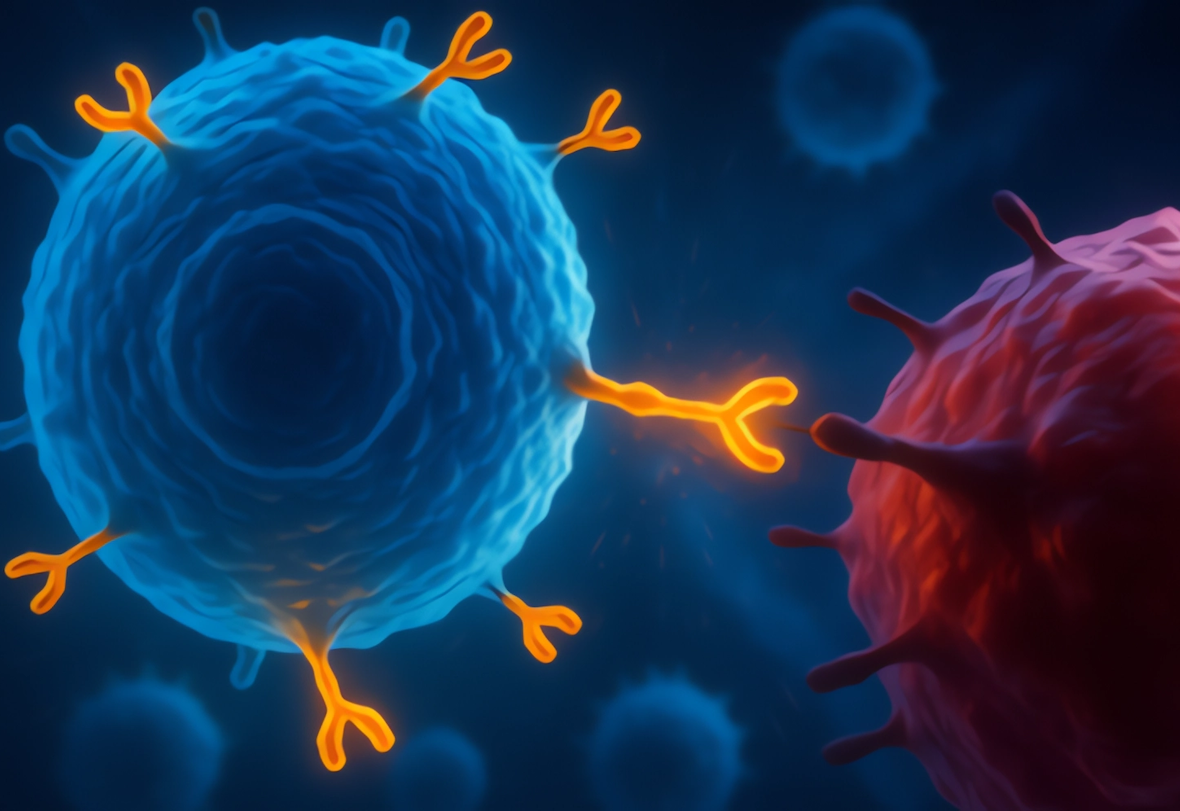 CAR-T cell therapy administered at the Inselspital in Bern offers new therapeutic options for patients with lymphoma, leukemia and myeloma. | © Inselspital
Inselspital Bern has performed its 300th CAR-T cell therapy treatment, underscoring Western Switzerland’s role as a leading center for advanced immuno-oncology.
The Inselspital in Bern has reached a major milestone with the completion of its 300th CAR-T cell therapy treatment, reaffirming its position as Switzerland’s leading center for this highly advanced form of personalized cancer care. CAR-T cell therapy was first introduced in Switzerland at the Inselspital in 2019 and has since become a key therapeutic option for patients with difficult-to-treat hematologic cancers.
CAR-T therapies are individualized immunotherapies designed for patients with lymphoma, multiple myeloma or acute leukemia who have not responded to conventional treatments. By genetically modifying a patient’s own T cells to recognize and destroy cancer cells, CAR-T therapies have significantly improved outcomes in cases where traditional chemotherapy or stem-cell transplantation offer limited benefit.
“CAR-T cell therapy greatly increases the chances of cure,” said Professor Thomas Pabst, Deputy Clinic Director and Head of Medical Oncology at Inselspital. “Compared with high-dose chemotherapy and stem-cell transplantation, CAR-T treatment is often far less aggressive while offering strong therapeutic potential.”
Switzerland’s leading CAR-T center
One in three CAR-T treatments in Switzerland is performed at the Inselspital, which offers all approved CAR-T products and participates actively in international clinical studies aimed at advancing next-generation cellular therapies. This leadership reflects the strength of the Swiss medical research ecosystem and its ability to translate scientific innovation into patient-centered care.
A milestone enabled by interdisciplinary collaboration
The 300-treatment achievement is the result of coordinated work across oncology, hematology, internal medicine, intensive care, clinical research, coordination teams, quality experts, data management specialists and legal support. “CAR-T therapy is far more than a medical procedure,” noted Professor Pabst. “It represents compassion, scientific excellence and the commitment of an entire team.”
Professor Urban Novak, Head of Medical Oncology at Inselspital, emphasized the human impact: “We thank all those who open new perspectives for patients through their work.”
One such patient, Esther Sommer, successfully treated for aggressive B-cell non-Hodgkin lymphoma after failing conventional therapies, described the day of her positive update as a “rebirth,” highlighting the profound effect of CAR-T therapy on patient lives.