FIT backs Enerdrape, Bioneris and Divea with growth and seed loans
Cleantech
24 February 2026
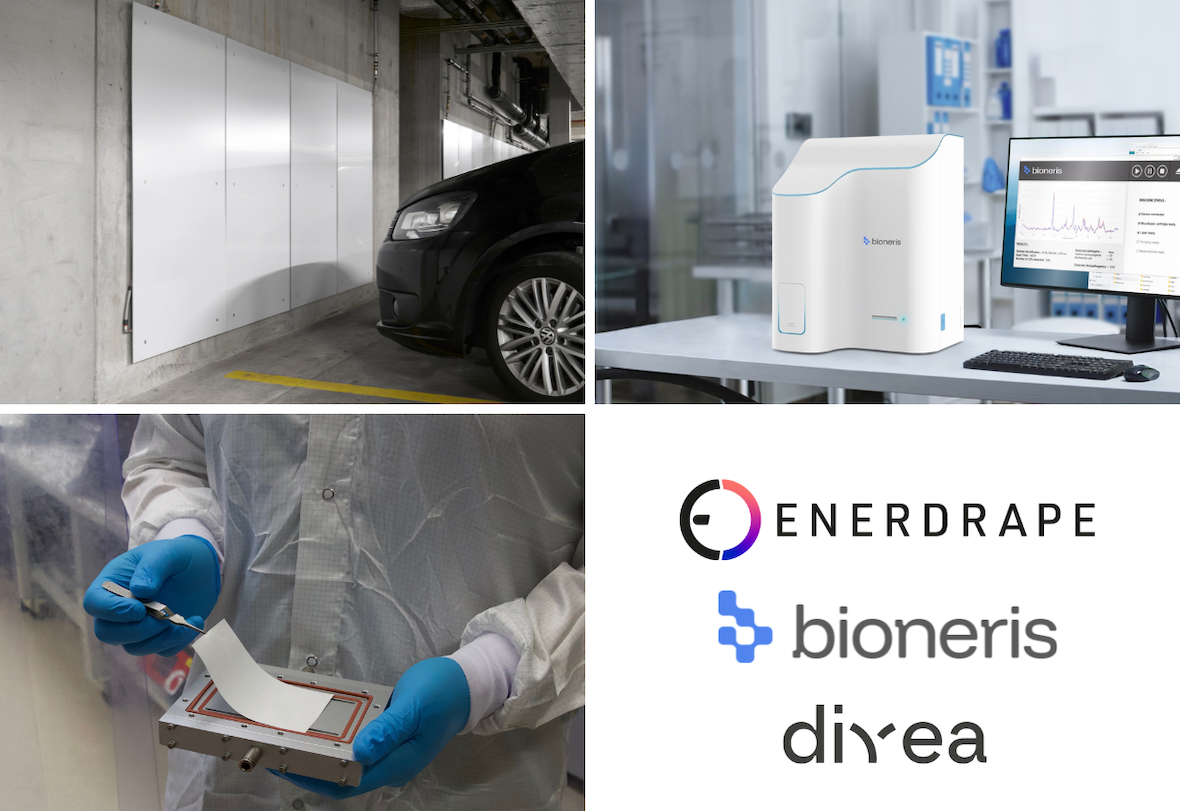 Enerdrape, which develops modular geothermal panels for underground energy recovery, Bioneris, which designs rapid food-borne bacteria detection systems, and Divea, which develops graphene-based carbon capture filters, all received loans from the Foundation for Innovation and Technology. | © FIT
Three Western Switzerland cleantech and medtech start-ups have received FIT support to scale geothermal panels, rapid bacteria detection and carbon capture filters.
The Foundation for Innovation and Technology (FIT) has granted new financing to three start-ups in Western Switzerland, supporting innovations in renewable energy, food safety and industrial decarbonization.
Enerdrape, known for its modular geothermal panels installed in underground environments, secured a CHF 400’000 Tech Growth loan. The company’s system captures shallow geothermal energy and residual heat from spaces such as parking garages, tunnels and basements without the need for drilling. A heat pump then transfers the recovered energy to a building’s heating or cooling system. According to the company, one square meter of panels can supply thermal energy for up to 23 square meters of living space. The funding will support team expansion, market development and new digital tools.
Bioneris received a CHF 100’000 Tech Seed loan to advance its rapid bacteria detection platform for the food industry. Its microfluidic chip, combined with Raman spectroscopy, enables automated identification of pathogenic bacteria within hours rather than days. The solution aims to reduce health risks, food waste and costs for producers. The funding will help validate the technology and continue testing targeted pathogens.
Divea also obtained a CHF 100’000 Tech Seed loan to industrialize its graphene-based carbon capture membranes. Designed for sectors such as cement, steel and chemicals, the filters selectively capture CO₂ directly from industrial exhaust streams. The support will allow Divea to move from laboratory-scale production toward continuous industrial manufacturing.