CHUV researchers develop new method to study autoimmune diseases
Life sciences
2 December 2025
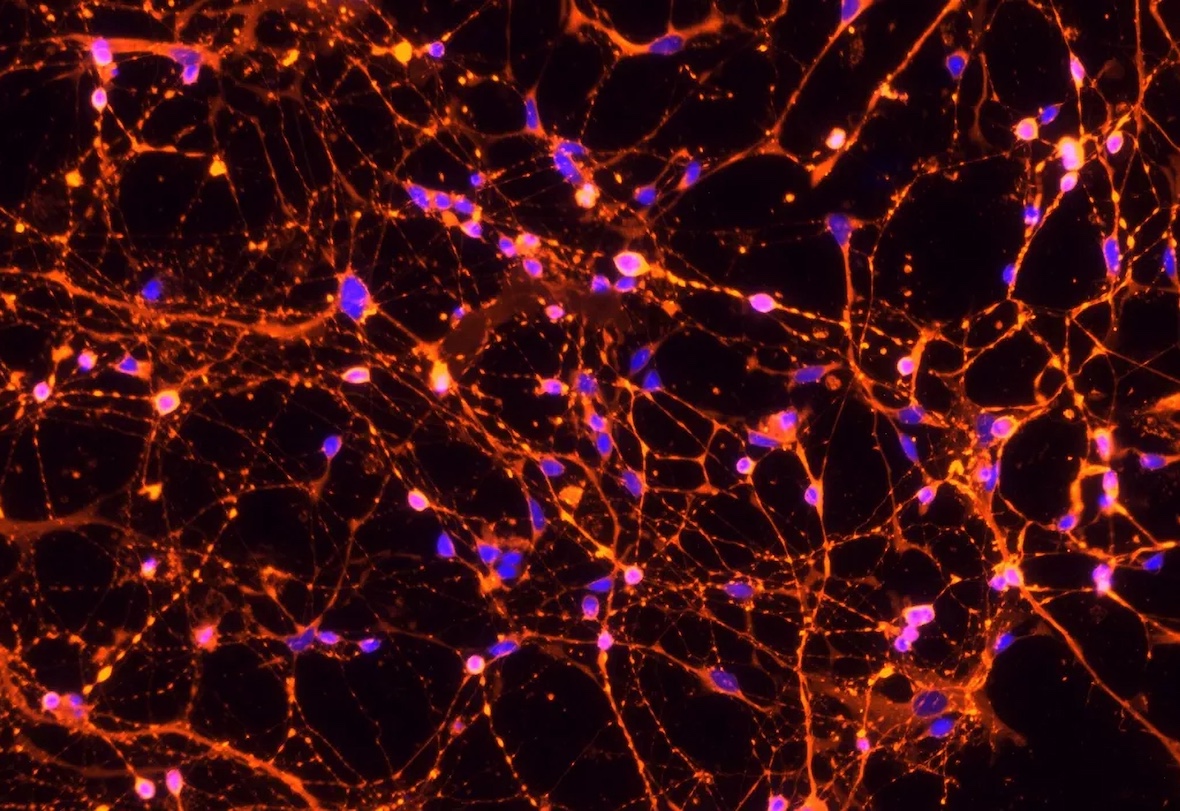 Neurons recreated from a patient’s blood cells, used to study the role of CD8+ T cells in autoimmune encephalitis. | © CHUV
Researchers at CHUV have validated a new stem-cell–based method to study autoimmune diseases in organs such as the brain, offering new insights into conditions like autoimmune encephalitis and multiple sclerosis.
CHUV researchers have validated a new approach for studying autoimmune disease mechanisms in organs that cannot easily be biopsied, such as the brain. The method, published in Nature Communications, enables scientists to observe how immune cells interact with patient-derived neurons, opening the door to more precise investigations of neuro-immunological disorders.
Autoimmune diseases occur when the immune system mistakenly targets healthy tissue and can affect organs ranging from joints to the digestive tract and the central nervous system. Understanding how immune cells behave in hard-to-access tissues has long represented a major challenge for researchers. Animal models provide important insights but cannot fully replicate human biology, and direct sampling of organs such as the brain is not feasible for research purposes.
To overcome this limitation, the team led by Professor Renaud Du Pasquier, Head of Neurology and of the Neuroimmunology Laboratory at CHUV, turned to induced pluripotent stem cell (hiPSC) technology. First presented to the team in 2012, the method reprograms cells collected from a blood or skin sample into stem cells that can then be differentiated into neurons or other cell types. This enables researchers to observe interactions between a patient’s immune cells and genetically matched neurons derived from their own tissues.
Supporting the development of more targeted therapeutic strategies
Using this approach, the study focused on autoimmune encephalitis, an inflammatory disease of the brain. The researchers demonstrated that CD8+ T lymphocytes, immune cells often referred to as “killer cells”, directly target neurons. Single-cell RNA sequencing further revealed that a specific subset of regulatory CD8+ T cells, normally responsible for moderating immune activity, appears to drive the disease process.
These findings validate a new research framework for studying autoimmune disorders in the brain and potentially in other organs that are difficult to sample, such as the pancreas or heart. The CHUV team is already applying the approach to multiple sclerosis, which affects an estimated 18,000 people in Switzerland. Early results suggest the method could contribute to improved understanding of disease progression and support the development of more targeted therapeutic strategies.