Impli secures GBP 1.4 million grant to advance continuous hormone monitoring for IVF
Life sciences
16 June 2026
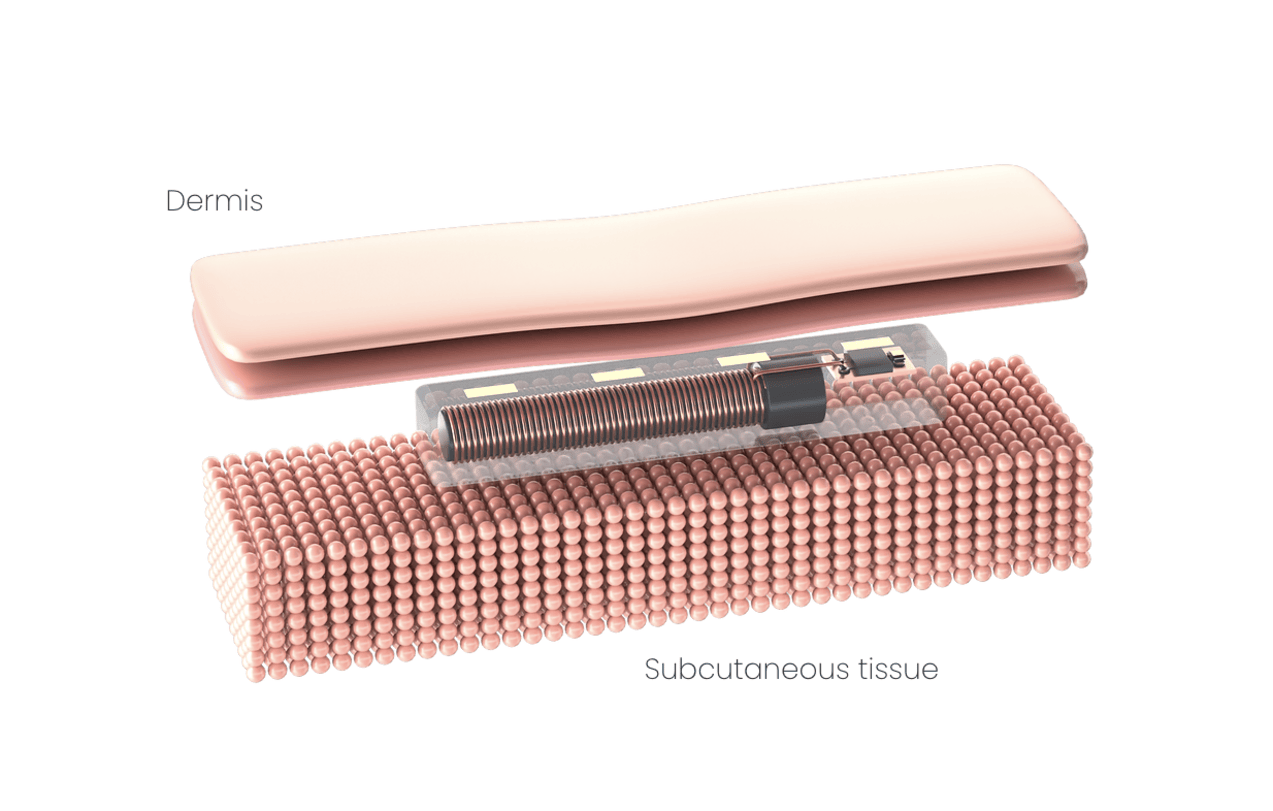 Impli’s BEAM patch uses microneedle biosensors to continuously monitor hormones for IVF treatment. The femtech company maintains a presence at Biopôle in Lausanne. | © Impli
Impli, the deeptech company developing continuous molecular monitoring for hormonal health and present at Biopôle in Lausanne, has been awarded a GBP 1.4 million grant to bring its hormone-monitoring patch toward clinical validation for in vitro fertilization.
Impli, a deeptech company developing continuous molecular monitoring for hormonal health, has been awarded a GBP 1.4 million grant from the United Kingdom’s National Institute for Health and Care Research (NIHR) Invention for Innovation program. The funding will advance BEAM (Bio-Endocrine Analysis Monitor), a minimally invasive microneedle patch, through clinical validation for use in in vitro fertilization (IVF). Founded as an Imperial College London spin-out, Impli has maintained a presence at the Biopôle life sciences campus in Lausanne since 2021.
The grant supports a 30-month consortium program bringing together Impli, Imperial College Healthcare NHS Trust, King’s College London and the patient network Fertility Europe, alongside medical device manufacturer TTP. The program will take BEAM from prototype to first-in-human validation, including a 25-participant pilot study and the regulatory and health-economic groundwork for adoption by the United Kingdom’s National Health Service.
Worn on the upper arm, the BEAM patch uses aptamer-based electrochemical biosensors to continuously measure estradiol, luteinizing hormone and progesterone in interstitial fluid, transmitting data to a smartphone where AI algorithms convert the signals into real-time hormone trends. Infertility affects one in six people worldwide, and IVF cycles currently require up to ten clinic visits for blood draws, with clinicians often acting on hormone values that are one to two days old. By reducing those visits to as few as two, the patch aims to enable real-time, personalized treatment adjustments.
Impli’s Swiss footprint runs deeper than its Lausanne base: the company developed its implantable CERES biosensor in collaboration with CSEM and the Zug-based start-up Yalosys, in a project supported by Innosuisse. While its first indication is IVF, BEAM is designed as a platform with potential applications across hormone-driven conditions, from polycystic ovary syndrome and endometriosis to menopause.