EPFL’s VirTues AI model maps tumor tissue across cancer types
Life sciences
17 August 2026
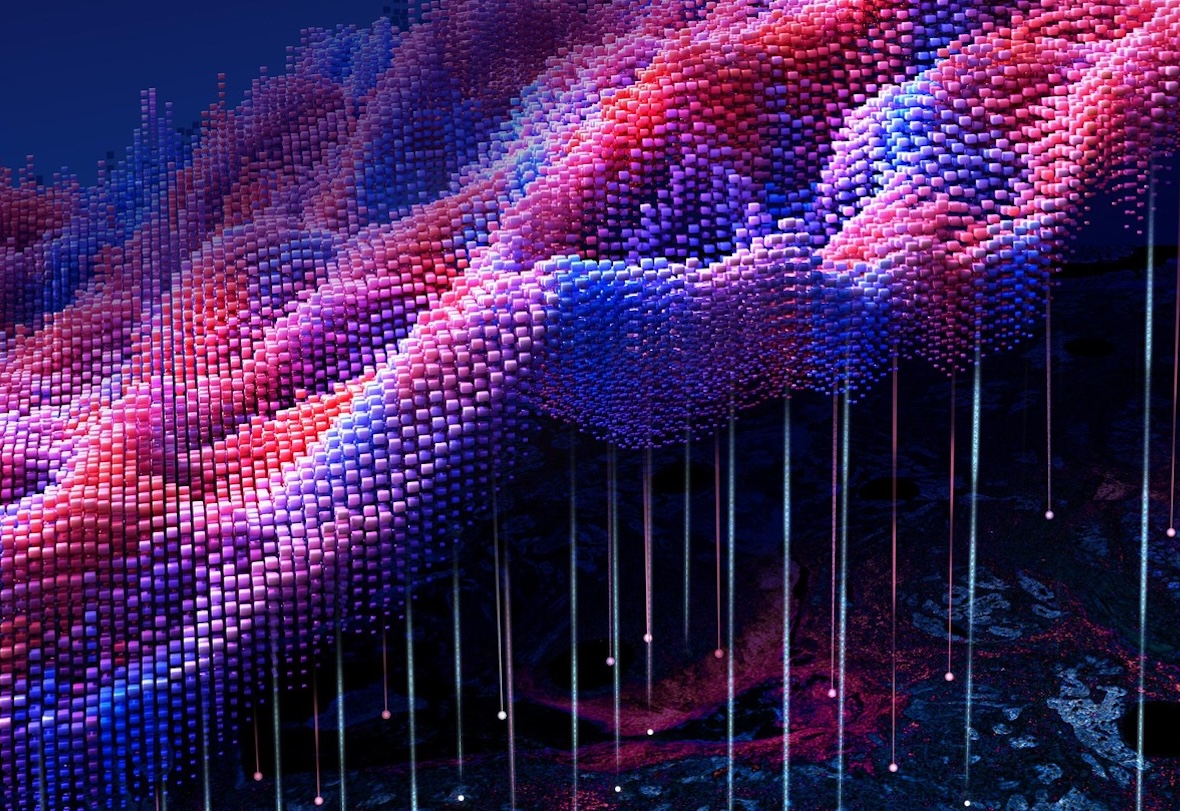 VirTues turns a tumor tissue section into a learned representation that can be compared across patients and studies. | © 2026 SayoStudio
Researchers at EPFL, with colleagues from the University of Geneva, Geneva University Hospitals and Zurich, have developed VirTues, an AI foundation model for tissue biology that analyzes tumor tissue across many cancer types, with results published in Nature.
Researchers at EPFL have developed Virtual Tissues (VirTues), a foundation model for tissue biology that analyzes tumor tissue across many cancer types. Developed by the Artificial Intelligence in Molecular Medicine group led by Charlotte Bunne, within EPFL’s School of Computer and Communication Sciences and School of Life Sciences, the work has been published in the journal Nature.
A tumor is more than its cancer cells: immune cells, blood vessels and surrounding tissue influence how a cancer grows and responds to treatment, and two tumors containing the same cell types can respond very differently depending on how those cells are arranged. Spatial proteomics captures this organization in molecular detail, but the resulting data are difficult to interpret and compare across studies. VirTues learns from spatial proteomics data across studies and cancer types, allowing analysis from individual cells to whole tissue sections and patient outcomes.
The team made two central advances. It assembled what it describes as the largest open dataset of spatial proteomics measurements to date, comprising more than 12,000 images from over 5,000 patients across 31 clinical cohorts. It also developed a new Transformer architecture that enables the model to learn from spatial proteomics data across studies, even when different sets of proteins are measured. Following the logic of foundation models used for language, VirTues is trained broadly rather than for a single predefined task, learning relationships among proteins, cells and their spatial context.
The work involved contributors from the University of Zurich, University Hospital Zurich, the University of Geneva and Geneva University Hospitals (HUG), where Olivier Michielin, Head of Precision Oncology, sees incorporation of the model into local and national precision oncology tumor boards as a natural next step.
VirTues forms part of a five-year project titled Virtual Patient Labs: AI-Driven Simulation and Diagnostics for Precision Oncology, for which Bunne was awarded the 2026 Lopez-Loreta prize. The project aims to build a computational model of an individual patient’s biology, combining the tissue component with routine pathology, genetic information and clinical data.