From biomedical start-up to clinical AI: sitem-insel opens two University of Bern CAS programs
Life sciences
19 October 2026
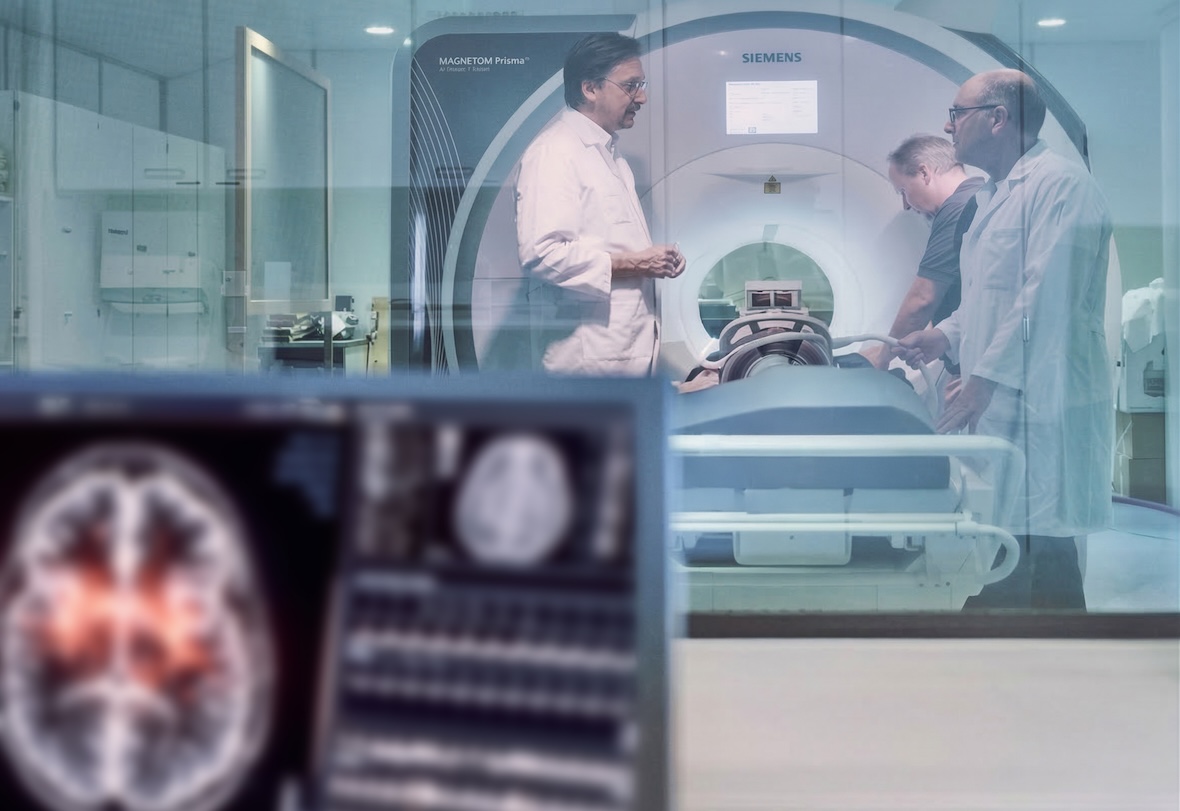 The sitem-insel School in Bern offers CAS programs in Biomedical Entrepreneurship and in Artificial Intelligence in Digital Medicine.
The sitem-insel School in Bern is accepting applications until 15 December 2026 for two continuing education programs of the University of Bern: a CAS in Biomedical Entrepreneurship and a CAS in Artificial Intelligence in Digital Medicine.
The sitem-insel School, part of the Swiss Institute for Translational and Entrepreneurial Medicine (sitem-insel) on the Insel Campus near the Inselspital, is accepting applications until 15 December 2026 for two continuing education programs awarding a Certificate of Advanced Studies (CAS) from the University of Bern. Both are taught in English, run part-time and cost CHF 12,600, payable in full or in installments.
CAS in Biomedical Entrepreneurship: from idea to market-ready strategy
A promising biomedical idea can start with a clinical need, a research finding or a new technology, but turning it into something that succeeds in the real world takes more than scientific expertise. Innovators also need to understand healthcare systems, markets, business models, financing and the practical steps of commercialization. The CAS in Biomedical Entrepreneurship is designed for professionals in life sciences, healthcare, pharma, biotech and medtech who want to take that step.
What makes the program hands-on is that each participant works on their own innovation project throughout. Through exercises, individual coaching and mentorship, an early idea gradually becomes a structured concept, a business model and a market-ready strategy, backed by a business plan. The project is developed across five areas: biomedical innovation, healthcare systems and market context, leadership and management, financial strategy, and new venture creation.
The program addresses both entrepreneurs building new ventures and intrapreneurs driving innovation from within established companies, hospitals and research organizations. Project managers, R&D managers and researchers working on healthcare innovation can equally benefit.
The 15-ECTS program runs for 12 months, from April 2027 to March 2028. It combines flexible online learning with around one to two on-site days per month at sitem-insel in Bern, and classes typically have up to 15 participants. It can be completed on its own, without committing to the full MAS in Translational Medicine and Biomedical Entrepreneurship (MAS TMBE). Participants who later decide to continue can have their credits recognized and build on the CAS through further modules toward the MAS.
CAS in Artificial Intelligence in Digital Medicine: educating physicians to work with AI
The CAS in Artificial Intelligence in Digital Medicine (CAS AIDM) is aimed at healthcare professionals, such as physicians, nurses and outpatient and emergency care staff, and at others working in life sciences, including researchers with a healthcare connection. It does not require a technical background, and it is particularly relevant for imaging-related fields such as radiology, neurology, cardiology and oncology. It is offered with the Department of Digital Medicine.
The program grew out of an idea from 2018 by Prof. Roland Wiest, Deputy Chief Physician at the University Hospital Bern, and PD Dr. Richard McKinley, Research Director at its neurology department. A year later, it became the first academic degree program in Europe on artificial intelligence in medical imaging addressed specifically to physicians, under its former name CAS AI in Medical Imaging. In an interview published by sitem-insel, Wiest says the main hurdle of AI in medicine is “ensuring that medical professionals are educated at the same speed as these technologies are being introduced to the clinics.”
Running from February to December 2027, the program combines five modules with an individual AI project and earns at least 15 ECTS. The modules cover the fundamentals of AI, developing and validating AI, AI applications in clinical settings, approaching AI, and legal and ethical challenges. The curriculum blends machine learning, statistics and applications integrated into real clinical workflows, using actual cases and data from various medical disciplines, and each participant brings a project from their own field. McKinley says the aim is “educating well-informed medical professionals who understand the commercial products available in the market and who know the language to effectively interact with the engineers.”
Courses take place on one to two full days per month in Bern, complemented by occasional virtual classes and weekly self-study tasks. Hybrid participation is possible.
Applying
The registration deadline for both programs is 15 December 2026. Admission requires a bachelor’s degree from a university or university of applied sciences in a relevant field such as life science, medicine, natural sciences or engineering, and professional experience is not required.
The canton of Bern’s start-up and innovation ecosystem, which includes sitem-insel, is presented in our overview of the Bern start-up ecosystem.