Rhonexum and ZuriQ sign a multi-year agreement to advance trapped-ion quantum computing
Tech
2 November 2026
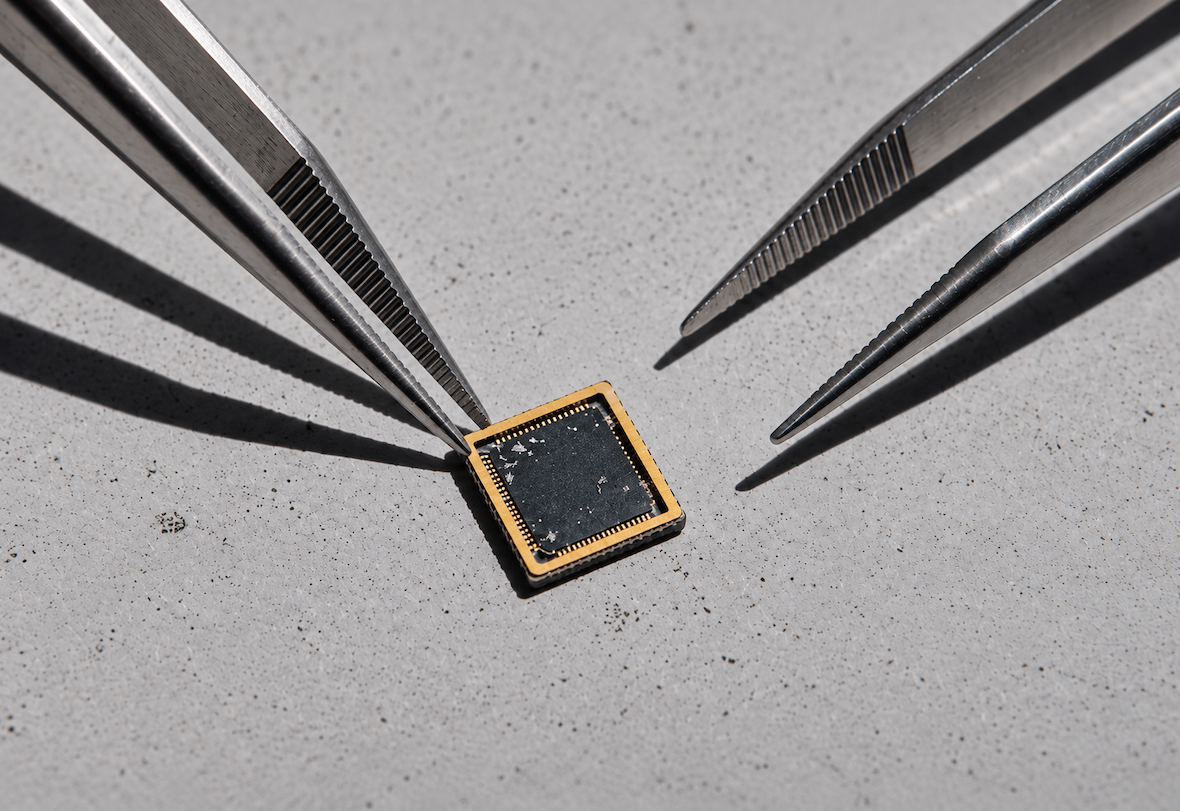 Rhonexum develops cryogenic integrated circuits for quantum computers. | © Rhonexum
Lausanne-based Rhonexum, a 2025 spin-off of EPFL, will supply cryogenic integrated circuits to quantum computing company ZuriQ under a multi-year commercial framework agreement.
Rhonexum and ZuriQ have signed a multi-year commercial framework agreement. Rhonexum will supply cryogenic integrated-circuit technologies and customization services, and ZuriQ will evaluate how each solution can advance its trapped-ion quantum computing roadmap. The framework also covers future orders, product deployments and technical collaboration.
The agreement has already led to a first order of Rhonexum’s inaugural product, scheduled for delivery by the end of 2026. It also gives ZuriQ privileged access to selected Rhonexum technologies, while ZuriQ’s feedback will help shape Rhonexum’s future products.
Reducing the wiring behind each qubit
The collaboration targets a key challenge in scaling quantum computers: the number of control signals per qubit that run from room-temperature sources into cryogenic environments. ZuriQ’s architecture uses electric and magnetic fields to create reconfigurable two-dimensional qubit arrays, and Rhonexum’s cryogenic electronics are intended to support denser arrays.
Founded in 2025 in Lausanne by Vicente Carbon and Dr. Hung-Chi Han as a spin-off of the AQUA Lab at EPFL, Rhonexum is based at the EPFL Innovation Park. ZuriQ is a Zurich-based company that spun out of Professor Jonathan Home’s lab at ETH Zurich in 2024. “Partnering with ZuriQ validates the relevance of our technology,” says Vicente Carbon, CEO of Rhonexum. Pavel Hrmo, CEO of ZuriQ, notes that collaboration across the Swiss quantum ecosystem is becoming increasingly important to accelerate industrial adoption.