Bewe awarded the Biopôle Pre-Clinical Top-Up for its digital therapy against food cravings
Tech
20 August 2026
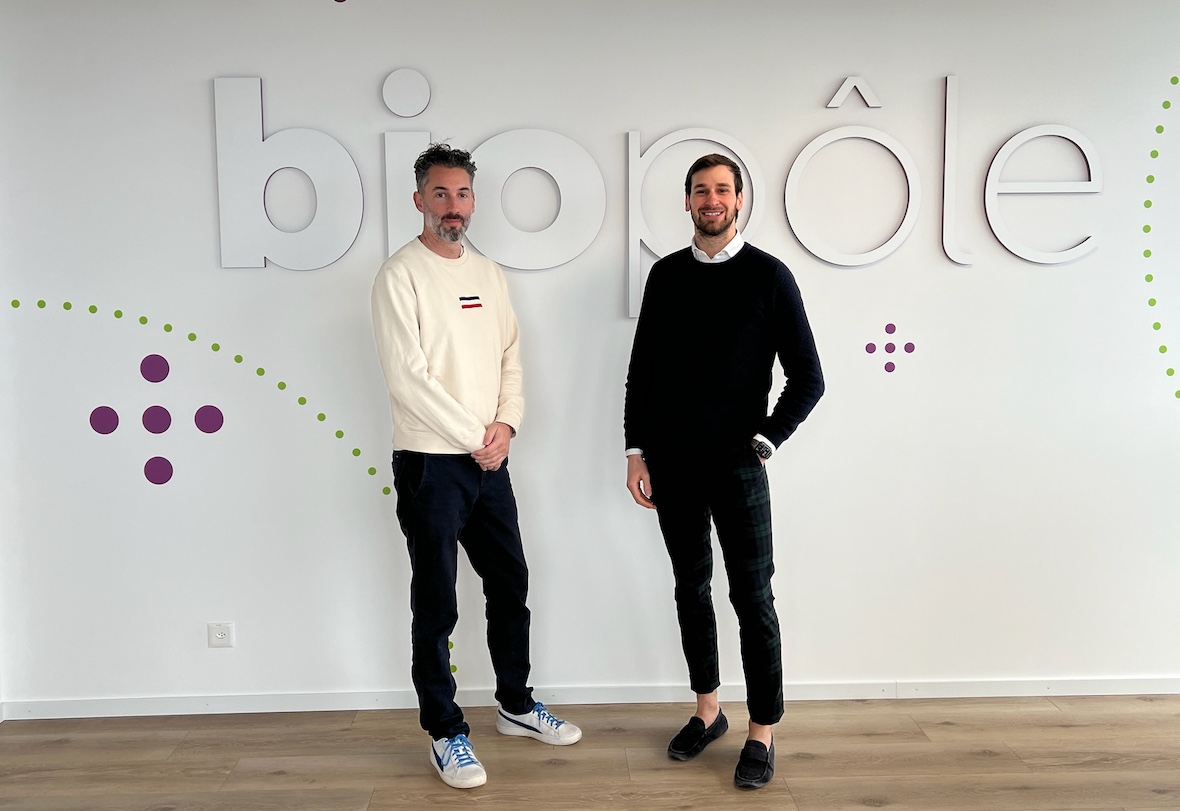 Bewe co-founders Prof. Lucas Spierer, Chief Scientific Officer, and Frédérik Plourde, CEO. | © Biopôle
Bewe, a University of Fribourg spin-off developing a neuroscience-based digital intervention for unhealthy food cravings, has been awarded Biopôle’s Pre-Clinical Top-Up, a CHF 250,000 convertible loan supporting start-ups facing high clinical validation costs.
Bewe, a spin-off of the University of Fribourg developing a neuroscience-based digital intervention for unhealthy food cravings, has been awarded the Pre-Clinical Top-Up by Biopôle, a convertible loan of CHF 250,000 designed to support start-ups facing high clinical validation costs. The award follows a CHF 2 million raise from investors including Arcanys Ventures, Capital Risque Fribourg, Kickfund, the Foundation for Innovation and Technology (FIT) and Swisspreneur.
The company had previously taken part in Biopôle’s Investment Readiness Program and Start-Up Fund, which financed research, development and infrastructure while helping the team refine its business plan and investment strategy. Bewe is the second recipient of the Top-Up, after Switchkine last year.
The funding will accelerate a series of clinical studies designed to generate evidence for the company’s digital therapy used in combination with anti-obesity medication. Bewe is working with academics at Stanford University and with the Centre Pluridisciplinaire Neuchâtelois de l’Obésité, a multi-expert weight management clinic in Neuchâtel, to evaluate how behavioral therapy can improve long-term treatment outcomes and reduce weight regain after medication is discontinued.
Over the coming year, Bewe will begin enrolling patients in its US and Swiss clinical trials and launch an AI-powered Digital Twin platform designed to deliver personalized cognitive interventions. Looking further ahead, the company aims to reach one million users and to extend its clinically validated platform beyond obesity to other addictive behaviors, including alcohol and nicotine, across Switzerland, Europe, the United Kingdom and the United States.