HeroSupport opens its first US clinical site for the SHIELD study
Life sciences
3 August 2026
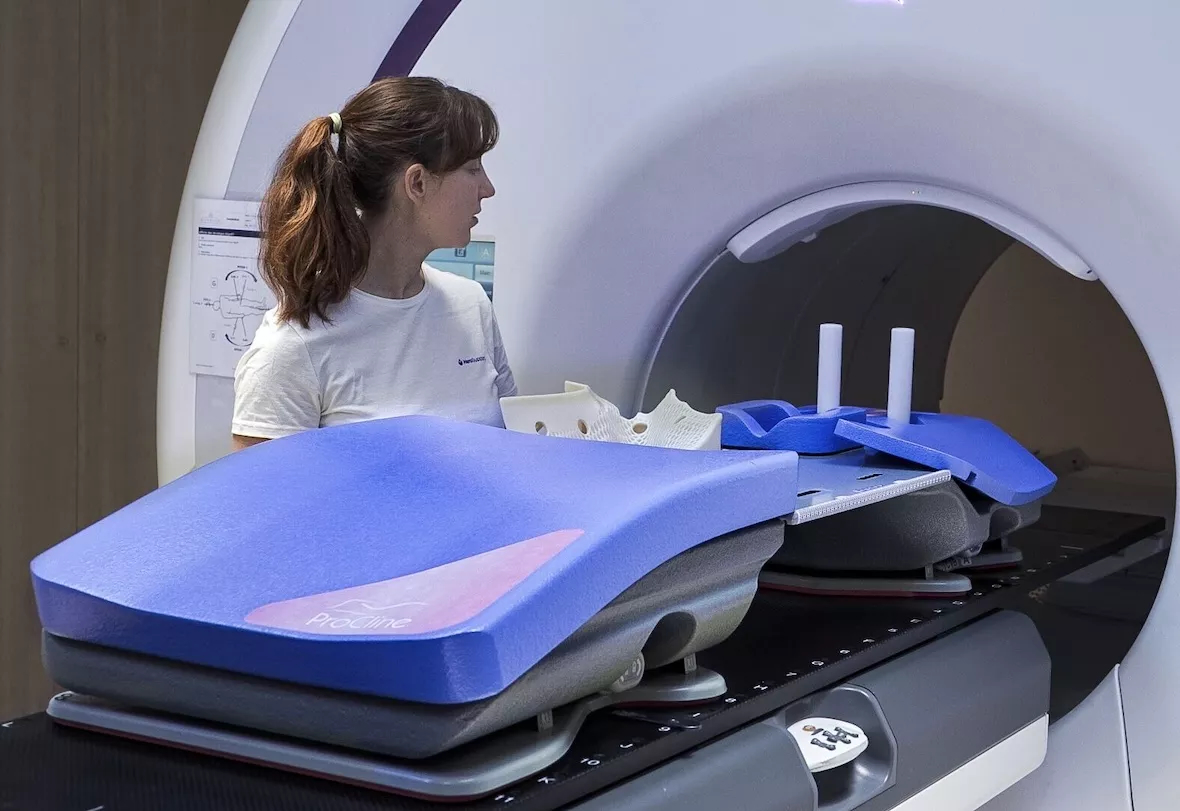 HeroSupport’s VENUS SHELL is a personalized prone breast immobilization device used during accelerated partial breast irradiation. | © HeroSupport
HeroSupport, a Geneva-based medtech company, has announced that NYU Grossman School of Medicine is the first clinical site in the United States to participate in its SHIELD study evaluating the VENUS SHELL breast immobilization device.
HeroSupport has announced that NYU Grossman School of Medicine is the first clinical site in the United States to participate in its SHIELD clinical study, with Prof. Naamit Gerber as principal investigator. Prof. Gerber is a professor and vice chair of education in the Department of Radiation Oncology at NYU Grossman School of Medicine and co-director of the breast cancer and hematologic malignancies disease management groups at NYU Langone’s Perlmutter Cancer Center.
The SHIELD study evaluates an approach to accelerated partial breast irradiation (APBI) using VENUS SHELL, a personalized prone breast immobilization device designed to improve the precision of local radiation delivery while enhancing patient comfort. The study will generate clinical evidence on positioning accuracy, reproducibility, workflow and patient comfort, and will also test the device in combination with optical surface monitoring systems to evaluate the possibility of avoiding skin tattoos.
The study will later open at clinical partner sites in Switzerland. The company notes that any commercial launch in the United States would follow the applicable regulatory pathway and is separate from the objectives of the clinical study.
Led by CEO and founder Giovanna Dipasquale, HeroSupport is in parallel preparing for broader commercial adoption in markets where the device has received regulatory clearance, including Europe, where it is CE-marked. The company has opened a new financing round to advance clinical development, expand into new markets and scale production.