
Switzerland leads the European Innovation Scoreboard 2026 for the ninth consecutive year
Business environment
14 July 2026
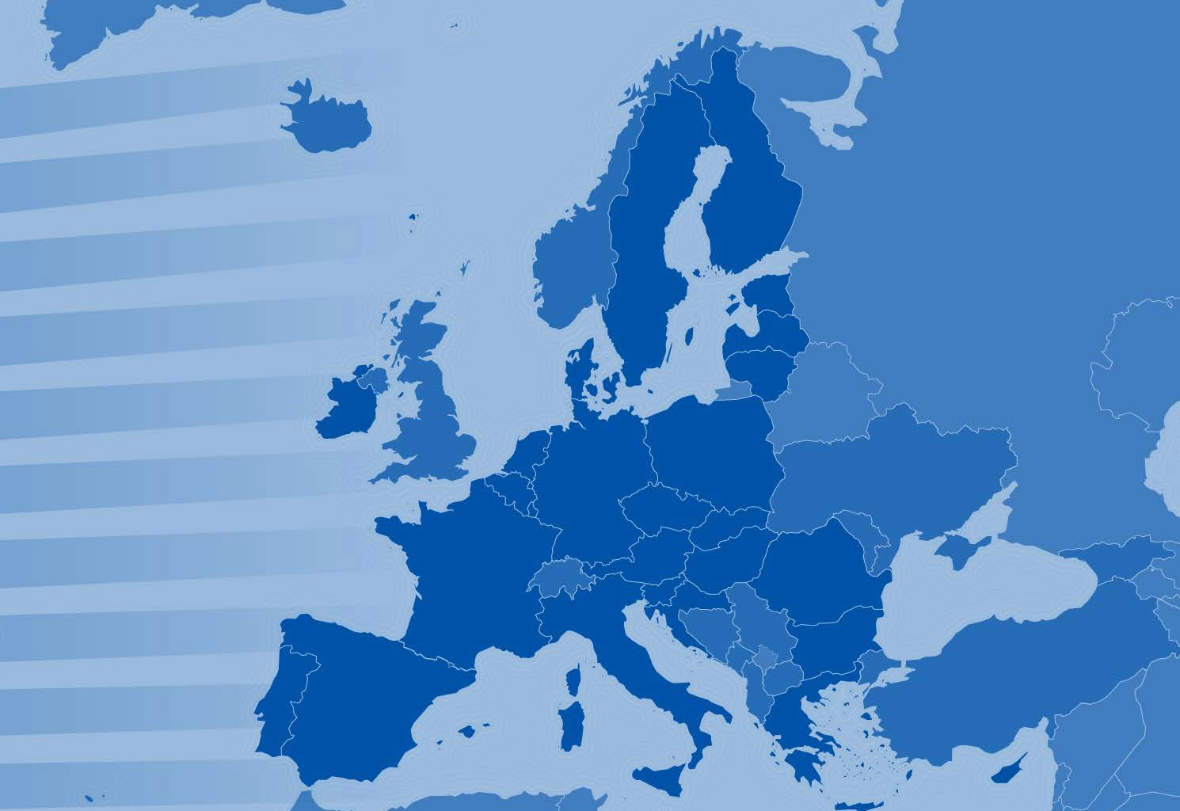 Switzerland tops the European Innovation Scoreboard 2026, performing at 141.3% of the EU average and leading all EU and neighboring countries. | © European Innovation Scoreboard
Switzerland has once again topped the European Innovation Scoreboard, ranking first among all EU Member States and neighboring countries in the 2026 edition, its ninth consecutive year at the top, with a performance of 141.3% of the EU average.
Switzerland has retained its position as Europe’s most innovative country in the European Innovation Scoreboard (EIS) 2026, published by the European Commission. Performing at 141.3% of the EU average, it ranks first among all EU Member States and neighboring countries for the ninth year in a row, ahead of the other above-average neighboring economies, the United Kingdom, Norway and Iceland. Among EU Member States, Sweden, Denmark and the Netherlands lead as Innovation Leaders.
Classed as an Innovation Leader, Switzerland tops several of the scoreboard’s dimensions, ranking first among all assessed countries for its attractive research systems, its linkages between science and industry, its firm investments, its intellectual assets, its human resources, and its resource and labor productivity. Its standout indicators reflect the depth of its research ecosystem:
- Public-private co-publications: 489.3% of the EU average, the single highest indicator score across the entire scoreboard
- International scientific co-publications: 283.5% of the EU average
- Foreign doctorate students as a share of all doctorate students: 271.3% of the EU average, up strongly on previous years
The country’s business sector R&D expenditure stands at 145.5% of the EU average, sustained by its pharmaceutical and life sciences industry. According to EY, Swiss companies invested EUR 34 billion in R&D in 2024, ranking Switzerland sixth worldwide, while business R&D as a share of GDP reached 2.23%, well above the EU average of 1.49%. Digitalization recorded the strongest year-on-year progress of any dimension, rising to 130.9% of the EU average.
The report also identifies relative weaknesses. Direct and indirect government support for business R&D ranks 26th of 40 countries, reflecting a policy choice to support research mainly through institutional grants and university funding rather than a general R&D tax credit. Trade impacts appear among the weaker dimensions, although the report notes this partly reflects a classification effect: Switzerland’s pharmaceutical and chemical sector, which accounted for 52% of goods exports in 2024 at a record CHF 149 billion, falls largely outside the medium and high-tech categories the scoreboard uses.
The results are consistent with the WIPO Global Innovation Index, which ranked Switzerland first worldwide for the fifteenth consecutive year in 2025. Published annually by the European Commission since 2001, the European Innovation Scoreboard provides a comparative assessment of the innovation performance of EU Member States, neighboring European countries and selected global competitors.