Fusionality raises CHF 3 million to build operations technology for fusion devices
Tech
14 September 2026
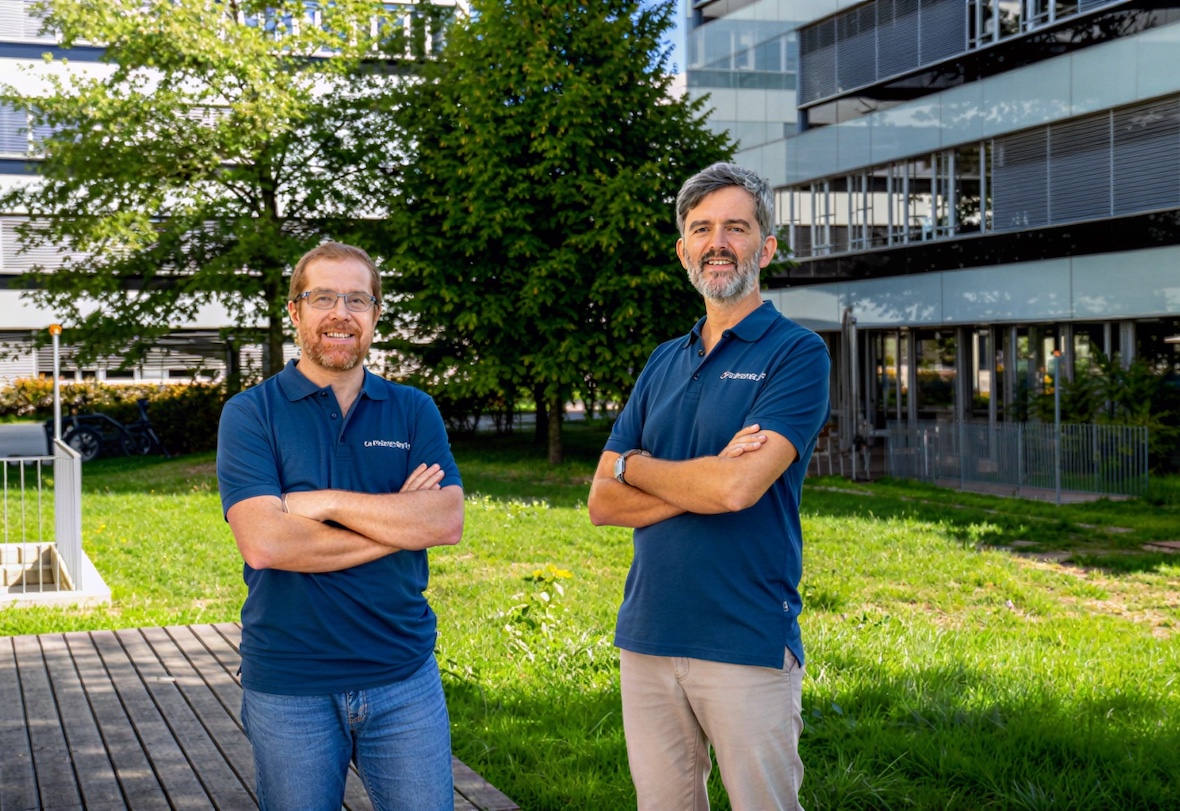 The founders of Fusionality, which develops measurement, simulation and control technologies for magnetic fusion devices. | © Fusionality
Fusionality, founded in 2026 by two researchers with backgrounds at EPFL’s Swiss Plasma Center and Google DeepMind, has raised a CHF 3 million pre-seed round to build its founding team in Lausanne and equip fusion companies with operations infrastructure.
Fusionality has announced a CHF 3 million pre-seed round co-led by Founderful and Playfair. The company builds technologies that enable fusion companies to operate, monitor and analyze their devices.
Magnetic fusion devices use powerful magnets to confine a super-hot plasma, recreating on Earth the conditions found in stars. More than 30 privately funded companies worldwide are now building such devices, alongside publicly funded national and international programs. All face a similar problem: measuring the properties of the plasma, turning those measurements into an understanding of its state, and steering the reactor’s heating, fueling and magnet systems within milliseconds. Many organizations are rebuilding this operations infrastructure almost from scratch, leading to duplication, higher costs and slower development.
Fusionality provides integrated solutions spanning hardware and software, designed to be transferable across devices with minimal customization, so that each subsequent deployment costs meaningfully less than the first.
The company was founded by Federico Felici, who completed a PhD in plasma physics at EPFL, was an assistant professor at TU Eindhoven and returned to EPFL to lead control activities at its Swiss Plasma Center before spending two and a half years at Google DeepMind. He is joined by co-founder Jonas Buchli, an electrical engineer who held a faculty position at ETH Zurich before joining Google DeepMind as a senior research scientist. The two met while teaching an AI to control EPFL’s TCV tokamak, a collaboration that led to a 2022 paper in Nature on the magnetic control of tokamak plasmas through deep reinforcement learning.
The funding will be used to build the founding team in Lausanne, bringing together control engineers, computational physicists, plasma measurement specialists and software engineers, and to deliver the company’s first customer engagements.