Neurosoft Bioelectronics raises USD 7.5 million to advance its brain interface platform
Life sciences
26 May 2026
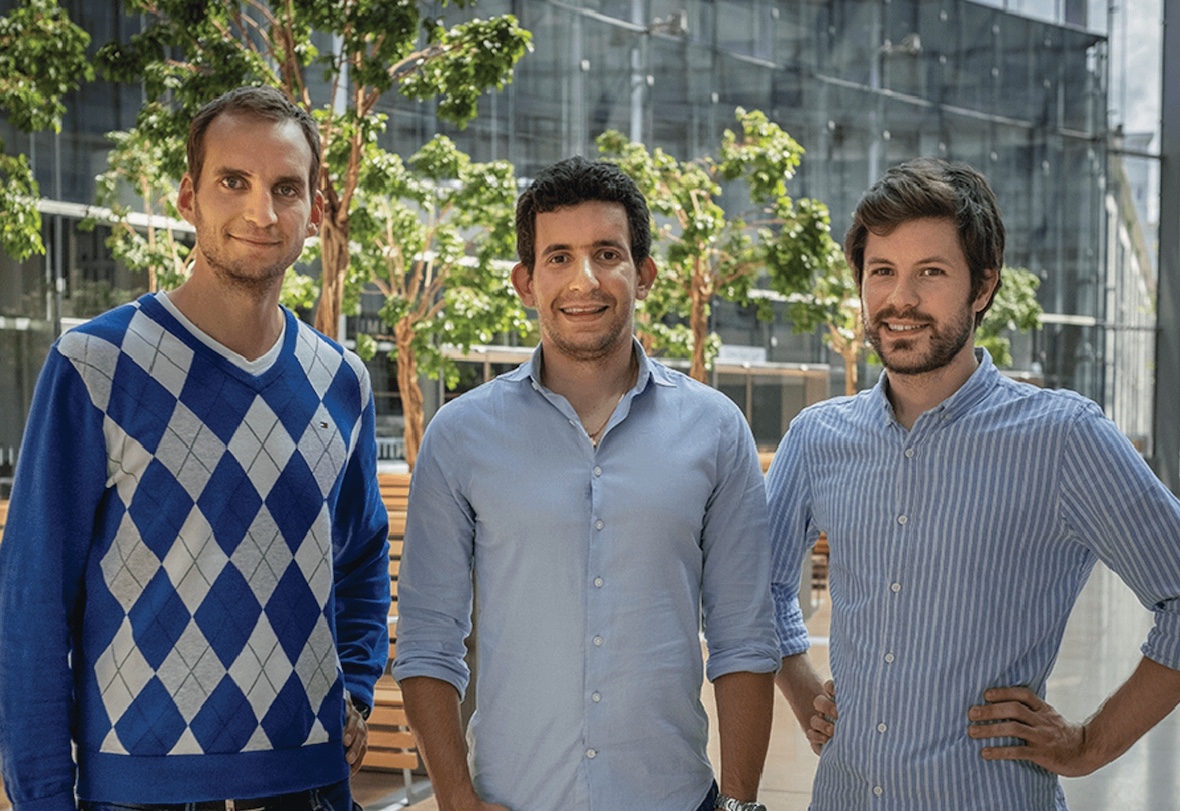 The co-founders of Neurosoft Bioelectronics, whose soft, stretchable brain interface technology has now been tested in 10 patients across two ongoing clinical trials in the US and Europe. | © Neurosoft Bioelectronics
Geneva’s Neurosoft Bioelectronics has raised USD 7.5 million in an oversubscribed seed round to advance its brain interface platform and build a cortical AI model.
Neurosoft Bioelectronics, the Geneva-based neurotechnology start-up developing soft, stretchable brain-computer interfaces, has raised USD 7.5 million in an oversubscribed seed round. The round was led by Skybound Venture Capital, with participation from Protocol Labs, IAG Capital Partners, and Connecticut Innovations. This brings Neurosoft’s total funding to more than USD 20 million, reflecting sustained investor confidence in the company’s clinical trajectory and market positioning.
Founded as an EPFL spin-off and headquartered at Campus Biotech in Geneva, Neurosoft develops minimally invasive brain interfaces based on proprietary soft, stretchable electrodes that are up to 1,000 times more compliant than those used in other flexible neural interfaces and cover up to 30 times more cortex than state-of-the-art BCIs. The company has now tested its technology in 10 patients across two ongoing clinical trials at UTHealth Houston and UMC Utrecht, including the world-first 64-channel stretchable brain interface study for epilepsy surgery guidance covered in our previous reporting. Neurosoft holds more than 25 patents, has published in more than 25 peer-reviewed journals, operates a GMP manufacturing line in Switzerland, and holds ISO 13485 certification.
The seed funding will support two near-term milestones: demonstrating minimally invasive deployment in human patients and achieving US commercialization of Neurosoft’s first brain interface product. The company has established a presence in New York and has received FDA feedback through multiple pre-submission meetings informing its regulatory pathway.
Beyond its clinical goals, Neurosoft is building a cortical foundation model, a large-scale AI trained on high-quality neural recordings collected through its implantable devices, applying the same logic as large language models trained on text. This model aims to redefine what BCIs can deliver for patients with severe neurological conditions and position brain interfaces as a universal communication layer between humans and machines. Neurosoft also recently announced a partnership with Science Corp to further accelerate its BCI platform.