MoleSense and Impli selected for the SPRIND Challenge on continuous hormone monitoring
Life sciences
3 August 2026
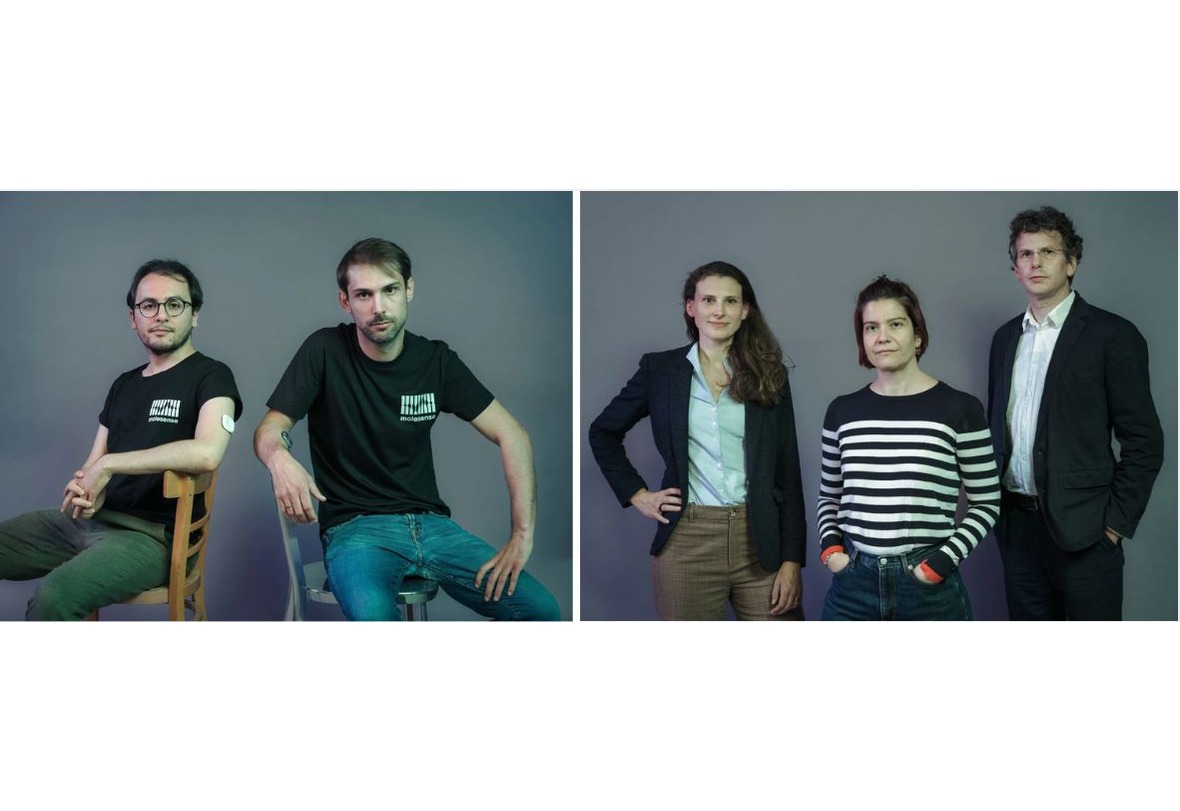 The MoleSense and Impli teams selected for the SPRIND Challenge on continuous hormone monitoring. | © SPRIN-D
MoleSense and Impli, both based at the Biopôle life sciences campus, have been selected by Germany’s Federal Agency for Breakthrough Innovation to develop biosensors capable of continuously measuring at least four hormones over seven days.
Two start-ups based at the Biopôle life sciences campus in Lausanne, MoleSense and Impli, have been selected by the German Federal Agency for Breakthrough Innovation (SPRIN-D) for its Challenge on continuous hormone monitoring. Support includes funding of up to EUR 1.5 million in Stage 1.
Hormones govern processes ranging from metabolism and immune function to cognition and reproduction, yet they are still measured through isolated, single-timepoint readings. Women are particularly affected, as their hormonal systems show the greatest variability and have long been underrepresented in research, contributing to conditions such as endometriosis, polycystic ovary syndrome and hormone-dependent cardiovascular diseases being detected late or poorly understood.
The Challenge asks teams to capture at least four hormones, among them estrogen, progesterone, LH, FSH, cortisol, testosterone or thyroid hormones, over at least seven consecutive days, directly in a biological matrix such as interstitial fluid, sweat or saliva. In parallel, a shared reference data pool is being created, intended as the first standardized collection of continuous hormone data across populations, life phases and health conditions.
MoleSense is developing a wear-and-forget platform combining ultra-low-power on-demand sweat extraction with aptamer-based multi-hormone nanobiosensing, and received a EUR 1.5 million pre-commercial research and development contract to measure four hormones within twelve months. Impli, which operates from London and Lausanne with intellectual property spun out of Imperial College London, is developing a minimally invasive, needle-based device that tracks a panel of reproductive and metabolic hormones simultaneously over a multi-day wear period.