
ClearSpace signs ESA contract for the next phase of its Phoenix satellite life-extension mission
Tech
5 October 2026
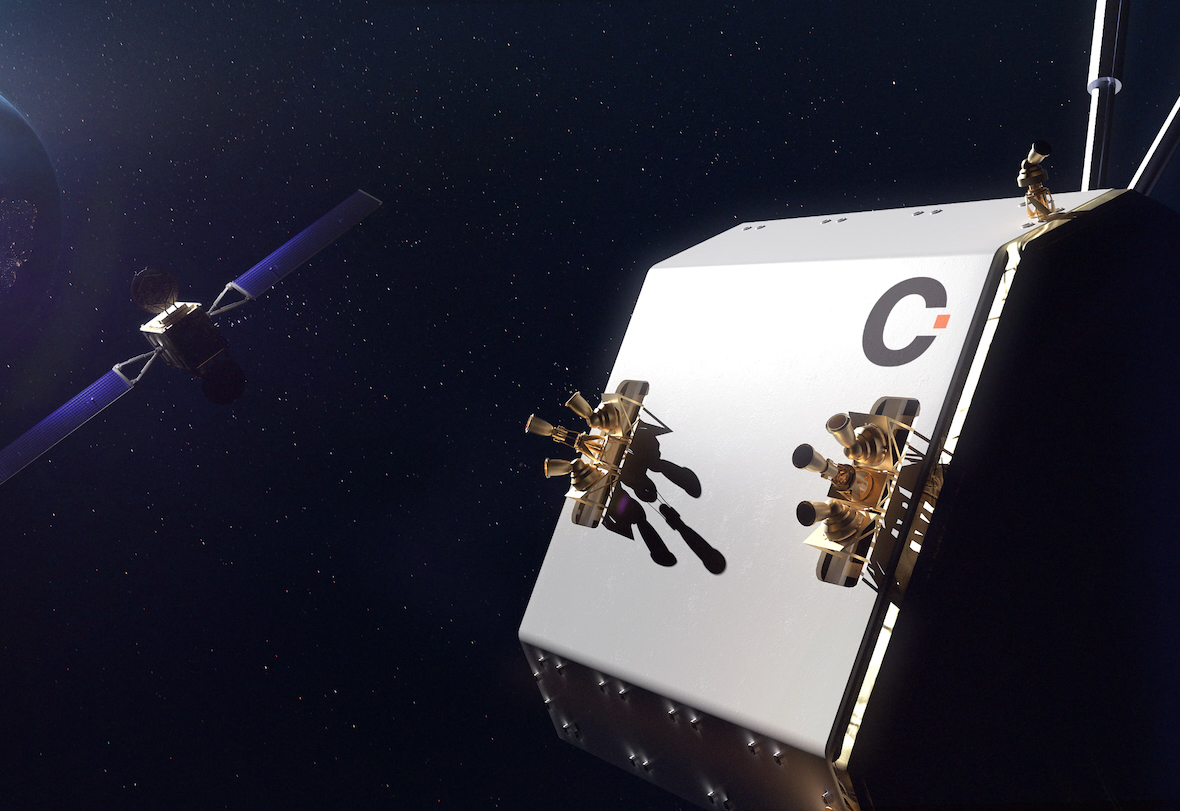 Phoenix is part of ClearSpace’s growing in-orbit servicing portfolio, which spans inspection, rendezvous and proximity operations, capture, active debris removal and satellite life extension. | © ClearSpace
Vaud-based ClearSpace has signed a contract with the European Space Agency to mature the docking, rendezvous and servicing technologies of Phoenix, a mission designed to extend the operational life of satellites in geostationary orbit.
ClearSpace has signed a contract with the European Space Agency (ESA) for the next phase of Phoenix, its mission to extend the life of satellites in geostationary orbit (GEO). The new phase will mature Phoenix’s rendezvous, docking and servicing technologies towards commercial GEO life-extension services, building on development carried out by ClearSpace Luxembourg with the support of the Government of Luxembourg and the Luxembourg Space Agency (LSA).
Phoenix is designed to let a servicing spacecraft rendezvous with and dock to an operational satellite, providing additional propulsion and attitude-control capability. By taking over functions such as station-keeping and repositioning, it aims to help operators extend the useful life of assets already in orbit, while also supporting responsible end-of-life operations.
The broader Phoenix development program is estimated at approximately EUR 100 million. The newly signed contract is funded under the Industrial Competitiveness line of ESA’s Advanced Research in Telecommunications Systems (ARTES) program and supports the next stage: advancing the mission architecture and the rendezvous, proximity operations, docking and servicing technologies required for future commercial operations.
A versatile docking capability
At the center of Phoenix is ClearSpace’s new docking capability, designed to establish a safe, predictable and secure mechanical connection with a satellite already operating in GEO, from first touch to firm connection. Reliable docking is critical for life extension: once connected, the servicer can provide propulsion and attitude-control support for station-keeping, repositioning and end-of-life operations.
Laurent Jaffart, ESA’s Director of Resilience, Navigation and Connectivity, said the agency is working with Member States and European industry to mature dual-use technologies that will benefit the sustainability, resilience and competitiveness of Europe’s space industry. ClearSpace co-founder and CEO Luc Piguet said Phoenix is the result of a shared ambition to make in-orbit servicing a practical capability for satellite operators.