EPFL and Empa unveil FireDrone for high-risk firefighting and industrial inspections
Tech
9 February 2026
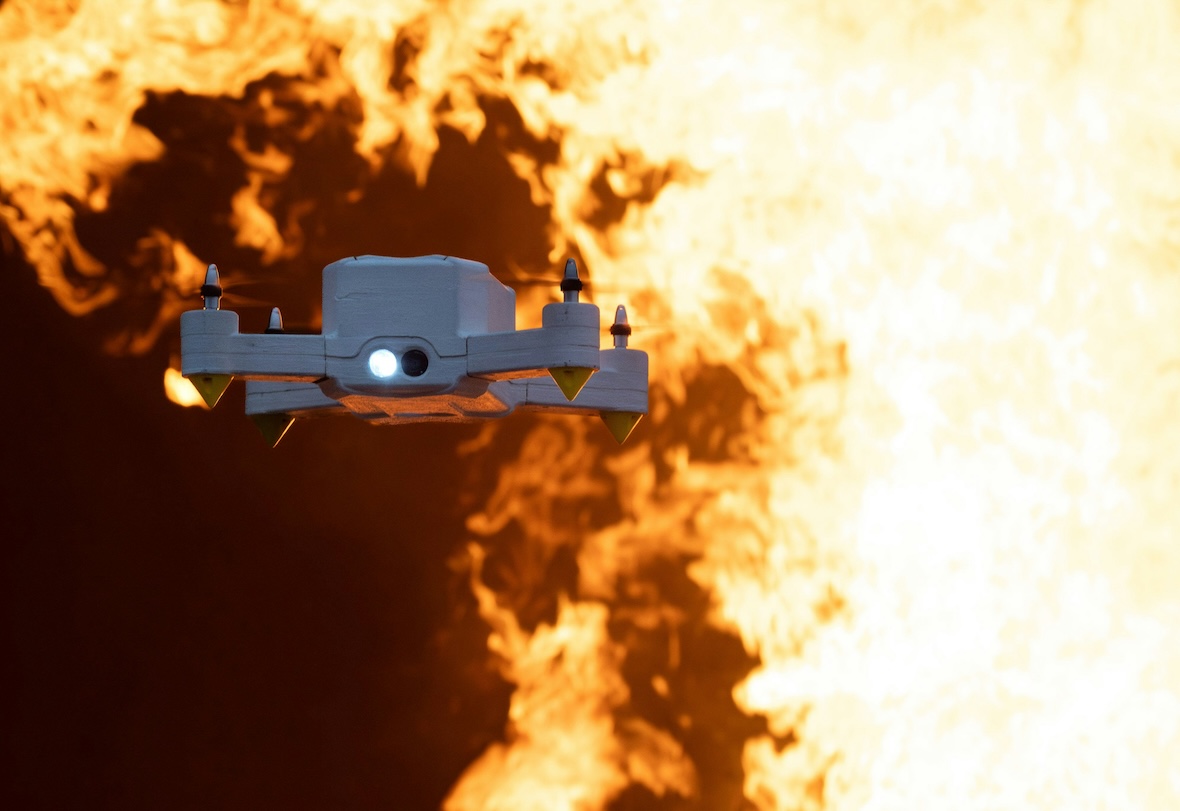 Developed from Empa research, the FireDrone can withstand extreme temperatures while transmitting real-time thermal data from hazardous zones. | © Empa
Developed at Empa and EPFL, the new FireDrone is designed to operate in extreme heat, supporting firefighting operations and industrial inspections in hazardous environments.
A new generation of FireDrone, developed through research at Empa and EPFL, is targeting critical applications in firefighting and high-temperature industrial environments. Designed to operate where human intervention and conventional drones are not possible, the heat-resistant aerial robot can fly in temperatures of up to 200 °C while transmitting real-time data from hazardous zones.
The FireDrone was initially developed within Empa’s research laboratories and is now being commercialized through a spin-off of Empa and EPFL. The system is intended to support emergency services during complex interventions in large buildings, tunnels, underground facilities, and industrial sites, where toxic smoke, structural instability, or hazardous materials significantly increase risk for first responders.
Equipped with an infrared camera, the drone provides live thermal images to incident commanders, enabling faster and more informed decision-making before firefighters enter dangerous areas. Unlike conventional drones, the FireDrone is optimized for indoor and GPS-denied environments, making it suitable for enclosed structures such as tunnels and industrial halls.
Beyond emergency response, the FireDrone is also designed for industrial inspections in high-temperature facilities such as cement plants, steelworks, and waste incinerators. By enabling inspections during ongoing operations, the technology could help reduce costly shutdowns and energy losses.
The FireDrone has already been tested in realistic environments, including firefighting training facilities and active industrial sites. According to the development team, further steps include simplifying pilot training and integrating a mobile docking and maintenance station into firefighting vehicles.