EPFL develops an automated method to inspect steel structures
Tech
18 November 2026
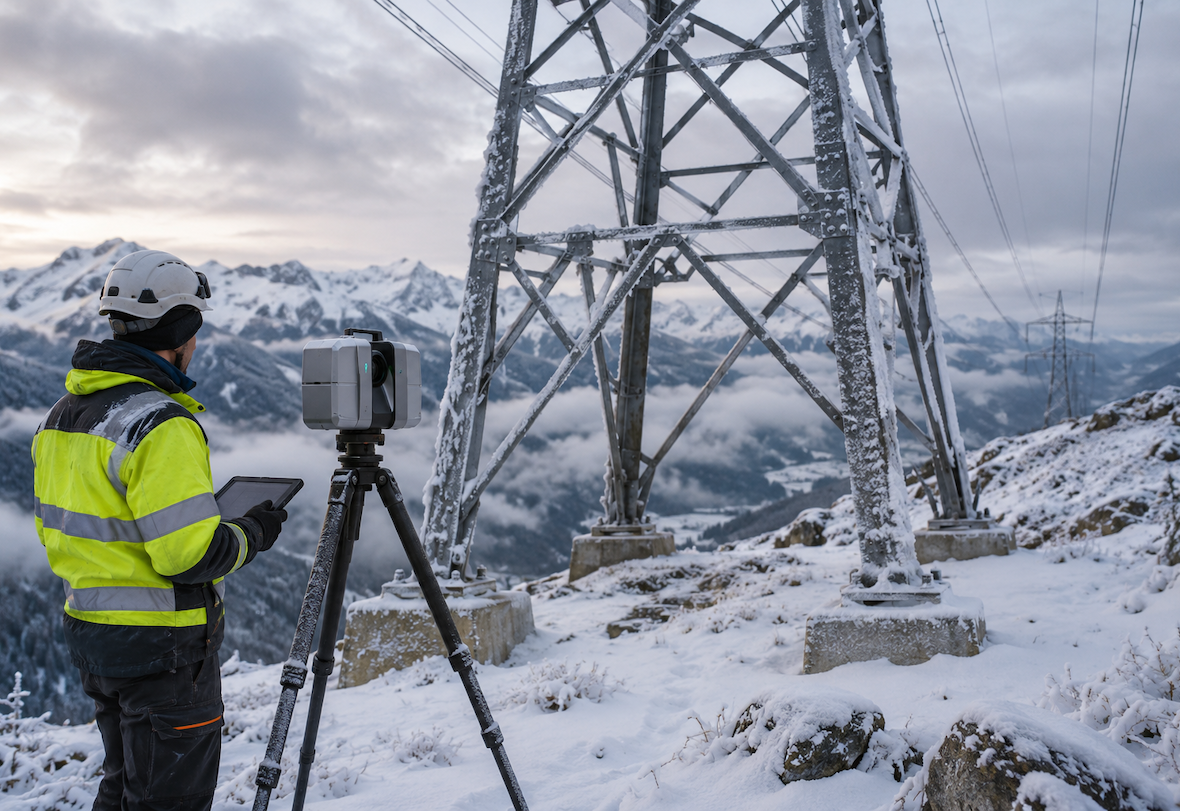 Inspecting steel structures such as electrical transmission towers can be difficult and dangerous in remote areas.
EPFL has developed an automated, data-driven method that uses 3D laser scans to assess the condition of damaged steel structures, starting with electrical transmission towers. The team is now seeking pilot projects with inspection companies.
EPFL has developed an automated method to assess damaged steel structures from 3D laser scans. The work comes from the Resilient Steel Structures Laboratory (RESSLAB), led by Professor Dimitrios Lignos, with researchers Tianyu Gu and Nenad Bijelić, and was published in Computers and Structures.
Telecommunication lines, electrical transmission towers, steel bridges and ski lifts are exposed to natural hazards such as strong winds and ice, as well as aging. Their inspection is visual and follows specific protocols, but sites can be hard to reach and dangerous, and partial evaluations can be costly.
The method captures the geometry and visible deformation of a structure with laser-based 3D scanning, processed with point-cloud techniques. Algorithms trained on thousands of laboratory experiments, together with virtual test samples validated by physics-based simulations, then estimate how much load a damaged element can still safely carry and whether it can keep operating or needs intervention. The method also quantifies measurement noise, caused by scan resolution and environmental conditions, and evaluates its effect on the final assessment, so inspectors know how much confidence to place in the results.
Transmission towers first
The method is meant to support inspectors, not replace them, by helping them make more informed decisions. The initial focus is on electrical transmission towers and other infrastructure with standardized steel cross-section profiles, which are important to Switzerland, often located in remote areas and hard to access after extreme weather such as snowstorms. The approach could later extend to conventional steel buildings and steel-concrete composite bridges, including railway infrastructure, and help assess whether decommissioned structures or components can be safely reused.
The team is now seeking pilot projects with inspection companies to refine the workflow before a possible commercialization. In related work, Lignos collaborates with Alcherio Martinoli’s Distributed Intelligent Systems and Algorithms Laboratory (DISAL) on drones to reach remote or hazardous structures, and with Olga Fink’s Laboratory of Intelligent Maintenance and Operations Systems (IMOS) on predictive algorithms to identify steel members that can be reused after their service life. The research was funded by the Swiss National Science Foundation (SNSF).